Coordinación General Operativa de Formación y Desarrollo Docente
Dirección de Educación Superior Para Profesionales de la Educación
Escuela Normal Estefanía Castañeda y Núñez de Cáceres.
C.T. 02DNL0004Z


Teacher: Esmeralda González Rameño
Have you ever been there?

Present perfect; already, yet
•Use the present perfect for actions that happened some time in the past.
•Use yet in questions and negative statements. Have you checked your email yet?
No, I haven't turned on my computer yet. Use already in affirmative statements:
I've already checkedmy email.
Conversation
Example:
Erin: It's great to see you again, Carlos! Have you been in Orlando long?
Carlos: You too, Erin! I've been here for about a week.
Erin: I can't wait to show you the city. Have you been to the theme parks yet?
Carlos: Yeah, I've already been to three. The lines were so long!
Erin: Ok, Well, how about shopping? I know a great store...
Carlos: Well, I've already been to so many stores. I can't buy any more clothes.
Grammar Focus
Present perfect; already, yet
The present perfect is formed with the verb have + the past participle.
Have you been to a jazz club?
Yes, I've been to several. No, I haven't been to one.
Has Carlos visited the theme parks?
Yes, he's visited three or four. No, he hasn't visited any parks.
Have they eaten dinner yet?
Yes, they've already eaten. No, they haven't eaten yet.
Contractions
= I have
= you have
= he has
= she has
= it has
= we have
= they have
= has not
= have not
I've
you've
he's
she's
it's
we've
they're
hasn't
haven't


Regular verbs
Irregular verbs
For and Since
•Use for + a period of time to describe how long a present condition has been true:
I lived in Mexicali for 25 years.
•Use since + a point in time to describe when a present condition started:
I've been in Mexicali since 1998.
Expressions with...
For
two weeks
a few months
several years
a long time
Since
6:45
last weekend
2009
elementary shool
It's a really nice city

Adverbs before adjectives
•Use a/an with (adverb) + adjetive +singular noun: It's a very modern city. It's an expensive city.
•Don´t use a/an with (adverb) + adjetive: It's really interesting (NOT: It's a really interesting)
Punta Cana is really nice
It's fairly expensive
It's not very big
It's a really nice place.
It's a fairly expensive destination.
It's not very big city.
New York is too noisy, and it's too crowded for me.
Example:
Mexicali is pretty beautiful.
Ensenada is very interesting.
Rosarito has a delicious sea food.
Mexicali is a desert city.
adverbs
-
too
-
extremely
-
very
-
really
-
pretty
-
fairly
-
somewhat

Conjunctions
-
Use and for additional information: The china food is delicious, and it's not expensive.
-
Use but, though, and however for contrasting information: Te china food is delicious, but it's very expensive / The china food is delicious. It's expensive, though/however.
Example:
-
Mexicali is a small city, and it's very interesting.
-
Mexicali is nice on spring, but the weater in summer is horrible.
-
Mexicali is a small city. It's not too small, though/ however.
The 7 wonders of the world


Modal verbs can and should
-
Use can to talk about things that are possible: We can I get some nice souvenirs? Use should to suggest things that are good to do: You should try the local restaurants.
-
Use the base form with can and should - not infinitive: We can I get some nice souvenirs? (NOT: Where can I to get...?) You should try the local restaurants. (NOT: You should to try)
Example:
-
You can go to the teater.
-
You should visit the Great Wall of China.
-
You shouldn't miss visit Chichen Itza.
It's important to get rest.

Common Healthn Problems

What should you do for a cold?
It's important to get some rest.
It's sometimes helpful to drink garlic tea
It's a good idea to take some vitamin C.
Adjective + infinitive;
noun + infinitive
Containers
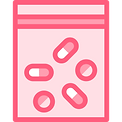
Bag

Bottle

Box

Can

Jar

Tube

Stick
Can/May I help you?
Can I have a bag of cough drops?
Could I have something for a cough?
May I have a bottle of pain medicine?
What do you suggest / have for a backache?
You could try this new cream.
You should get a heating pad.
Why don't you try these pills?
Modal verbs can, could, and may for requests; suggestions
Oral Test